Article
Your first Python program: say hello in 5 minutes
The easiest possible start: install nothing fancy, type a few lines, and see Python talk back to you.
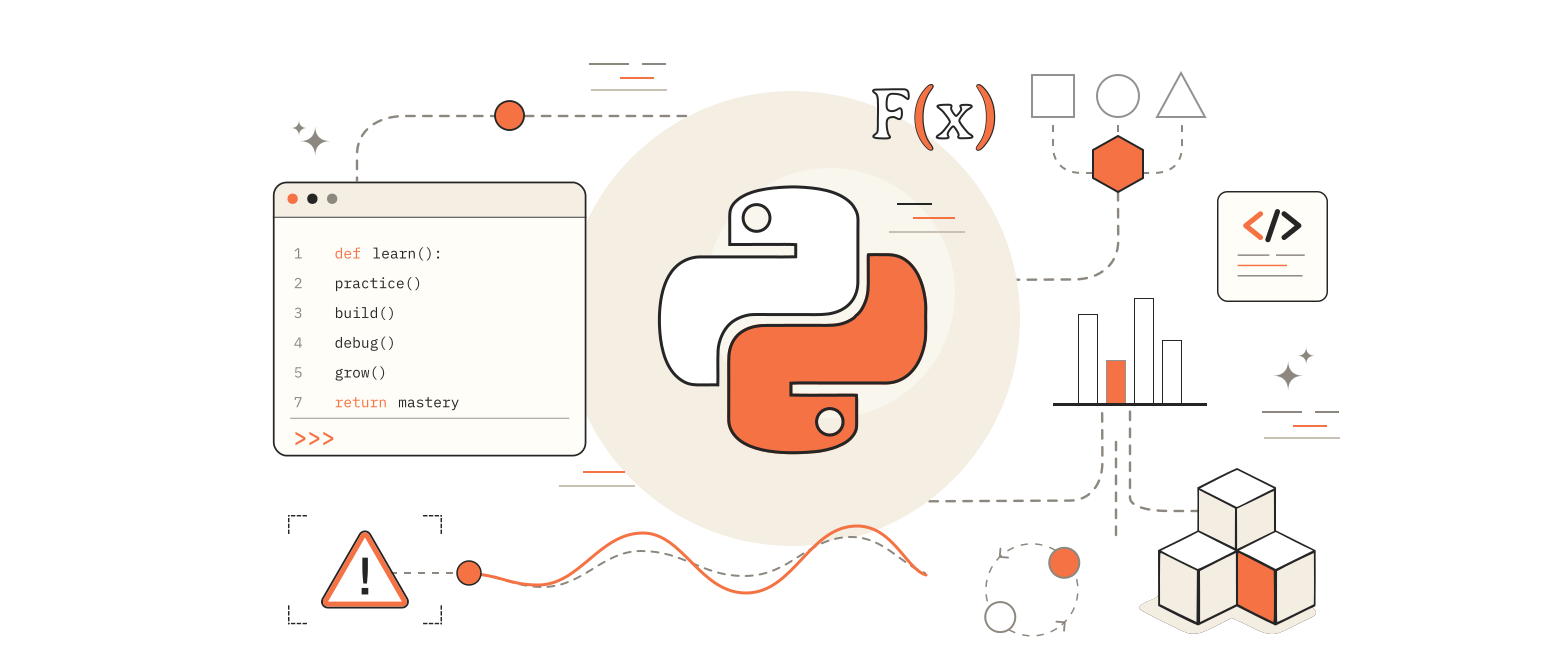
This is the gentlest way to start Python.
No folders of files. No AI keys. No complicated setup.
Just: open Python → type a little → see a message.
If you can follow a recipe, you can do this.
What you need
Python 3 on your computer. Check in a terminal:
python --version
If that fails, try:
python3 --version
You should see something like Python 3.11 or 3.12.
If Python is missing, install it from python.org and tick Add Python to PATH on Windows.
Step 1 — Open a place to type
Option A (simplest): open a terminal and type:
python
You should see >>>. That means Python is waiting for you.
Option B: create a file called hello.py in any folder (Notepad, VS Code, or Cursor is fine).
We will show both.
Step 2 — Print a message
Type this (or put it in hello.py):
print("Hello, Sythra!")
Then:
- In the
>>>prompt: press Enter - Or from a file: run
python hello.py
You should see:
Hello, Sythra!
What happened?
print(...) means “show this on the screen.”
The text inside quotes is a string — just words for the computer.
Step 3 — Use a variable (a labeled box)
A variable is a name that holds a value.
name = "Asha"
print("Hello,", name)
Output:
Hello, Asha
Change "Asha" to your name and run it again. Same program, your message.
Step 4 — Ask a question
name = input("What is your name? ")
print("Nice to meet you,", name)
- Python asks for your name
- You type and press Enter
- It greets you
input(...) means “wait for the human to type something.”
Step 5 — Tiny full program
Save as hello.py:
print("Welcome!")
name = input("What is your name? ")
print("Hello,", name)
print("You just ran your first Python program.")
Run:
python hello.py
That is it. You wrote a real program.
If something goes wrong
| What you see | What to try |
|---|---|
python not found | Use python3, or reinstall and add to PATH |
| Red error about quotes | Make sure quotes match: "Hello" not "Hello |
| Nothing happens | Make sure you saved the file, then ran python hello.py from that folder |
What you learned
printshows text- Strings live in quotes
- Variables store values
inputreads what you type
Next easy wins (when you want them):
Or practice step-by-step inside Sythra.
Five minutes. One print. You’re a Python beginner now — for real.